
Fire safety training is an important investment for workplaces, schools, hospitals, factories, warehouses, offices, hotels, restaurants, residential buildings, and other occupied properties. However, choosing a training course should involve more than comparing prices.
A course may look professional online but still fail to address the actual risks faced by the people attending it. Another course may contain useful information but be too advanced, too general, or unsuitable for the building where participants work.
The right fire safety training should help people understand hazards, recognize warning signs, respond appropriately to emergencies, follow evacuation procedures, and understand their responsibilities.
In Pakistan, fire safety planning should also take into account applicable building requirements and the nature of the occupancy. The Building Code of Pakistan Fire Safety Provisions 2016 contains provisions related to evacuation, fire drills, fire protection systems, and emergency procedures. It states that emergency egress and relocation drills should be conducted according to the requirements applicable to different occupancies and that written records of drills should be maintained.
This makes training more than a certificate. It should contribute to a practical safety culture.
Why Fire Safety Training Matters
Fire equipment is important, but equipment alone cannot protect people.
Employees and occupants need to understand what an alarm means, where they should go during an evacuation, how to report an emergency, and what actions are expected from them.
Training can help answer important questions such as:
- What should someone do when a fire alarm sounds?
- Where are the emergency exits?
- Who should contact emergency services?
- What responsibilities do designated staff members have?
- How should visitors be directed during an evacuation?
- When should people evacuate instead of attempting to deal with an emergency?
- How should fire safety concerns be reported?
The goal should always be to improve preparedness rather than create unnecessary confidence.
Start by Identifying Your Training Needs
Before buying a course, first determine why the training is required.
A small office may need basic awareness and evacuation training. A factory may have more complex fire hazards and require specialized instruction. A hospital may need training that considers patients who cannot evacuate independently. A warehouse may need greater emphasis on storage-related hazards and emergency procedures.
The building’s occupancy, size, layout, hazards, number of workers, and existing fire protection systems should all influence the training program.
A course designed for one environment may not be appropriate for another.
Check Who the Training Is For
A good training provider should clearly explain who the course is designed for.
Possible audiences include:
- General employees
- Supervisors
- Safety officers
- Facility managers
- Security personnel
- Emergency response teams
- Fire wardens
- Students or teachers
- Hospitality workers
- Industrial personnel
- Building management staff
Not everyone needs the same level of training.
For example, a general employee may primarily need awareness and evacuation knowledge, while someone assigned a formal fire-safety role may need more detailed responsibilities and competency requirements.
NFPA 1082 addresses professional qualifications for facilities fire and life-safety directors and emphasizes competencies involving administration, planning, training, emergency response, and recovery.
This illustrates why training should be matched to the responsibilities of the participant.
Check the Trainer’s Qualifications
The quality of training depends heavily on the person delivering it.
Before purchasing a course, ask about the trainer’s:
- Relevant qualifications
- Fire-safety experience
- Training experience
- Industry background
- Knowledge of applicable standards
- Experience with similar buildings
- Professional credentials where relevant
A certificate alone does not automatically prove that a trainer has the appropriate knowledge or experience.
The provider should be able to explain who will deliver the course and why that person’s background is relevant.
For specialized training, participants should be taught by people with appropriate technical competence rather than relying entirely on generic presentations.
Look at the Course Content
Do not buy a course based only on its title.
Ask for a syllabus or detailed outline before making a decision.
A useful general fire-safety program may cover topics such as:
Fire Prevention
Participants should understand common causes of fires and the importance of controlling hazards.
Fire Detection and Alarms
Participants should understand the purpose of detection and alarm systems and what they should do when an alarm activates.
Emergency Evacuation
The course should explain evacuation procedures, routes, assembly arrangements, and responsibilities.
Fire Protection Equipment
Training can explain the purpose and limitations of equipment such as extinguishers and other building fire-protection systems.
Emergency Communication
Participants should understand how emergencies are reported and communicated within the organization.
Housekeeping
Training should address the importance of controlling unnecessary combustible materials and keeping escape routes clear.
Electrical Safety
Basic awareness of electrical fire hazards can be valuable in many workplaces.
Emergency Planning
Participants should understand how emergency plans work and what their individual responsibilities are.
The exact curriculum should be adjusted to the hazards and needs of the organization.
Make Sure Training Includes Evacuation
Evacuation should be a major part of most workplace fire-safety programs.
The Building Code of Pakistan Fire Safety Provisions 2016 includes specific provisions concerning building evacuation and emergency egress drills. It also states that drills should be designed in cooperation with local authorities where applicable and that records should be maintained.
A course that only explains fire theory without teaching participants how the organization’s emergency procedures work may be incomplete.
Employees should understand:
- How alarms are communicated
- Which routes they should use
- Where they should assemble
- How to respond to instructions
- How visitors are handled
- Who has specific emergency responsibilities
Training should reflect the actual building rather than relying entirely on generic examples.
Check Whether the Training Is Practical
Fire safety training should not necessarily be a long classroom lecture.
Good training can combine:
- Presentations
- Demonstrations
- Discussions
- Building walkthroughs
- Emergency scenario exercises
- Evacuation practice
- Question-and-answer sessions
- Written materials
- Assessments
The appropriate format depends on the type of training and participants.
NFPA’s current fire-service training framework emphasizes structured competencies and safe, effective training for emergency responders.
For ordinary workplace awareness training, the focus should remain appropriate to the participants’ roles. Employees should not be encouraged to undertake dangerous firefighting activities simply for the sake of making a course appear more practical.
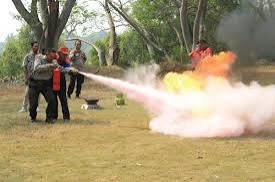
Be Careful With Live-Fire Demonstrations
Some training providers advertise live-fire demonstrations as a major feature.
Organizations should ask whether such activities are genuinely necessary and whether they are being conducted in an appropriately controlled professional environment.
Live-fire training involves additional hazards and should never be improvised.
Specialized standards exist for fire-training facilities and training evolutions, demonstrating that such activities require proper planning and controls. NFPA 1400, for example, provides requirements for fire-service training and incorporates criteria related to training facilities and specialized emergency-response instruction.
For general employees, awareness, prevention, alarm response, evacuation, and emergency procedures may be more relevant than physically confronting a fire.
Check Whether the Course Covers Your Fire Alarm System
Fire alarm awareness can be an important part of workplace training.
Participants should understand the purpose of the alarm system and what they are expected to do when it activates.
A modern fire alarm arrangement can include detectors, manual initiating devices, control panels, notification appliances, power supplies, and other components.
NFPA 72 is a major reference for fire alarm and signaling systems and addresses installation, inspection, testing, and maintenance.
In Pakistan, the Pakistan Engineering Council also recognizes installation, commissioning, and maintenance of fire detection, alarm, and suppression systems as a specialized engineering category.
This distinction matters when buying training.
General employees need to understand how to respond to an alarm. They should not be expected to perform technical maintenance or modify a fire alarm system in Pakistan unless they have the appropriate qualifications and responsibilities.
Does the Course Teach People When Not to Fight a Fire?
This is an important question.
Fire training should not create the impression that every employee should attempt to extinguish a fire.
The decision to use firefighting equipment depends on factors such as the person’s training, the type and size of the fire, available equipment, escape conditions, and the organization’s emergency plan.
For many employees, evacuation is the priority.
A training provider should clearly explain the limitations of personal firefighting and emphasize personal safety.
No employee should feel pressured to take unreasonable risks.
Check the Evacuation Plan
A good course should connect training with the organization’s actual emergency plan.
Participants should know where they are expected to go.
Training can be more useful when it includes a building-specific review of:
- Primary exits
- Alternative exits
- Stairways
- Assembly areas
- Alarm points
- Emergency communication
- Areas requiring special assistance
The Building Code of Pakistan Fire Safety Provisions 2016 states that people should not fail to leave a building when a fire alarm system is activated unless an approved evacuation plan or routine testing and maintenance provisions provide otherwise.
This reinforces the importance of having clear procedures rather than leaving employees to make decisions without guidance.
Ask About Fire Drills
Training and drills are related but not identical.
Training provides knowledge and explains responsibilities. A drill allows an organization to practice its emergency arrangements.
A good provider should explain whether its service includes:
- Drill planning
- Evacuation exercises
- Observation
- Timing or performance measurement where appropriate
- Identification of problems
- Post-drill discussion
- Written records
- Corrective-action recommendations
Pakistan’s fire safety provisions specifically address emergency egress and relocation drills and require written records of drills.
Organizations should use drill results to improve their emergency plans rather than treating drills as simple formalities.
Ask About Assessment
A certificate is more meaningful when participants have actually demonstrated understanding.
Ask whether the course includes an assessment.
Depending on the program, this could involve:
- A written test
- Knowledge questions
- Scenario-based questions
- Practical demonstrations appropriate to the training
- Attendance requirements
- Instructor evaluation
The assessment should match the course objectives.
A short awareness session does not necessarily need a complicated examination, while specialized professional training may require more formal competency evaluation.
NFPA professional qualification standards use defined job-performance requirements and competency-based approaches for relevant roles.
Do Not Choose a Course Based Only on the Certificate
Some buyers focus almost entirely on whether the course provides a certificate.
A certificate can be useful for documenting participation, but it should not be the only reason for purchasing training.
Ask:
- What did participants actually learn?
- Who delivered the course?
- Was there an assessment?
- Is the content relevant to the workplace?
- Does the training address the organization’s emergency plan?
- Can participants apply the knowledge appropriately?
A certificate should document useful learning rather than replace it.
Check Whether the Content Is Updated
Fire safety practices and standards can change over time.
Before purchasing training, ask when the course material was last reviewed.
A reputable provider should have a process for updating its content when relevant standards, technology, or best practices change.
NFPA’s current training resources show how professional fire-safety education evolves alongside updated standards and emerging risks.
This does not mean every course needs to use the newest international standard for every topic. It means the provider should be able to explain the basis of its material.
Make Sure Pakistani Requirements Are Considered
International standards can be valuable educational resources, but training delivered in Pakistan should also consider the local context.
The Building Code of Pakistan Fire Safety Provisions 2016 provides an important reference for fire and life-safety matters in Pakistan. It includes provisions related to evacuation, drills, fire protection, and emergency procedures.
Organizations should also consider applicable local authority requirements and the specific characteristics of their building.
A course that talks only about foreign regulations without explaining how the information relates to the Pakistani workplace may not be the best choice.
Consider the Type of Workplace
Training should reflect the hazards employees actually face.
Offices
Office training may focus on evacuation, electrical safety, alarms, housekeeping, emergency communication, and basic fire awareness.
Schools
School programs need age-appropriate procedures, staff responsibilities, student evacuation, assembly areas, and communication.
Hospitals
Hospital training may need to address patients who require assistance, staff responsibilities, relocation procedures, and specialized building systems.
Warehouses
Warehouse training may focus on storage arrangements, combustible materials, emergency access, alarms, evacuation, and workplace-specific hazards.
Factories
Industrial facilities may require more specialized training based on machinery, processes, chemicals, electrical systems, and other hazards.
Hotels
Hotel staff may need training that considers visitors who are unfamiliar with the building and may require assistance.
The best training is relevant to the people receiving it.
Check the Training Format
Training may be available in several formats:
- On-site classroom training
- Live online sessions
- Self-paced online courses
- Blended learning
- Workshops
- Refresher sessions
The format should match the learning objectives.
Online learning can be useful for awareness and theoretical knowledge. However, building-specific evacuation practice and certain practical competencies may require an on-site component.
NFPA currently offers online learning covering fire protection, electrical safety, emergency response, and industrial hazards, showing that online education can play a useful role when appropriately designed.
Ask About Course Duration
Longer does not automatically mean better.
A two-hour course can be more useful than an eight-hour course if it is well designed and relevant to the participants.
However, a complex industrial training program may require significantly more time than a basic awareness session.
The important question is whether the course duration is reasonable for the learning objectives.
Ask the provider to explain:
- Total duration
- Breaks
- Practical components
- Assessment time
- Number of participants
- Instructor-to-participant ratio
Consider Class Size
Very large classes can make interaction difficult.
If employees are expected to ask questions, participate in discussions, practice evacuation procedures, or complete assessments, class size matters.
Ask the provider how many participants can attend one session and how practical activities will be managed.
For specialized training, smaller groups may provide more opportunity for instructor feedback.
Check the Training Materials
Participants should receive useful learning materials where appropriate.
These might include:
- Course notes
- Emergency procedures
- Checklists
- Reference material
- Assessment information
- Contact details for follow-up questions
Materials should be clear and easy to understand.
Training should not depend entirely on participants remembering a long presentation after the session ends.
Ask About Refresher Training
Fire safety knowledge can fade if it is never revisited.
Organizations should consider whether refresher training is appropriate based on their risk assessment, workforce changes, drills, incidents, equipment changes, and applicable requirements.
New employees may need induction training, while existing employees may need periodic refreshers.
A training provider that offers continuing support may be more useful than one that only delivers a single session and disappears.
Check References and Reputation
Before buying training, look for evidence of previous work.
Ask the provider for relevant references or examples of organizations they have trained, where appropriate.
Consider:
- Trainer experience
- Client feedback
- Course structure
- Professional affiliations
- Relevant credentials
- Responsiveness
- Quality of training materials
Be cautious about providers that make unrealistic claims or promise certificates without meaningful learning.
Understand Exactly What You Are Buying
Before making payment, obtain the details in writing.
Confirm:
- Course title
- Learning objectives
- Number of participants
- Training location
- Duration
- Trainer
- Course materials
- Assessment
- Certificate arrangements
- Practical components
- Follow-up support
- Total cost
- Any additional charges
This prevents misunderstandings later.
A Simple Fire Safety Training Buying Checklist
Before choosing a course, ask these questions:
About the Provider
- Is the trainer suitably qualified?
- Does the provider have relevant experience?
- Can they provide references?
About the Course
- Is the syllabus available?
- Is it suitable for our workplace?
- Does it cover evacuation?
- Does it explain alarm response?
- Does it address relevant hazards?
- Is there an assessment?
About Practical Learning
- Will participants review actual escape routes?
- Is a drill included where appropriate?
- Are practical activities safe and properly controlled?
- Will the trainer identify workplace-specific weaknesses?
About Documentation
- Is a certificate provided?
- Are attendance records maintained?
- Are assessment results documented?
- Will the organization receive recommendations?
About Future Support
- Are refresher courses available?
- Can the provider support future drills?
- Can training be adapted after workplace changes?
These questions can help an organization compare providers based on quality rather than price alone.
Common Mistakes When Buying Fire Safety Training
Choosing the Cheapest Provider
Price is important, but the cheapest option may not provide the best value.
Buying a Generic Course
A course that ignores the actual workplace may not prepare employees for realistic emergencies.
Focusing Only on Certificates
A certificate is useful documentation, but actual knowledge and competency matter more.
Ignoring Evacuation
Employees need to know what to do when an emergency occurs.
Using Outdated Material
Training should be reviewed periodically.
Choosing Unqualified Trainers
A professional-looking presentation does not guarantee technical competence.
Encouraging Unsafe Practical Activities
Training should never expose participants to unnecessary hazards simply to make the session appear impressive.
The Role of Fire Safety Training in a Larger Safety Program
Training should not exist separately from the rest of the organization’s fire safety program.
It should connect with:
- Fire alarm systems
- Emergency exits
- Fire extinguishers
- Emergency lighting
- Fire doors
- Sprinkler systems
- Emergency communication
- Fire drills
- Maintenance
- Risk assessments
- Evacuation plans
A fire alarm system in Pakistan can provide an important warning, but employees need to understand how to respond when that warning occurs.
The Pakistan Engineering Council recognizes fire detection, alarm, and suppression installation, commissioning, and maintenance as a specialized engineering category, reinforcing the distinction between general employee awareness and technical system work.
Employees should understand their role without being expected to perform specialized engineering tasks.
Why the Right Training Is Worth the Investment
Good training can help an organization identify weaknesses before an emergency.
It can improve awareness, clarify responsibilities, support evacuation planning, and help employees understand the importance of reporting hazards.
The value of training is therefore not limited to the day the course is delivered.
Its real value appears when people remember what they learned and respond appropriately during an emergency.
For organizations in Pakistan seeking fire-safety information and professional support, Flame Defender can be explored as a relevant fire-protection resource.
Conclusion
Buying fire safety training should be treated as a safety decision rather than simply a purchasing decision.
The right program should be suitable for the organization’s risks, delivered by competent trainers, based on reliable information, connected to the actual emergency plan, and supported by meaningful assessment and follow-up.
Before choosing a provider, check the syllabus, trainer qualifications, practical elements, evacuation content, assessment method, documentation, and relevance to Pakistani requirements.
Most importantly, do not judge a course by its certificate or price alone.
A successful training program should help people understand what to do before, during, and after a fire emergency while keeping personal safety at the center of every decision.
When training works together with properly maintained fire protection systems, clear emergency procedures, regular drills, and responsible management, it becomes a valuable part of an organization’s overall fire safety strategy.
FAQs
1. What should I check before buying fire safety training?
Check the trainer’s qualifications, course syllabus, learning objectives, workplace relevance, duration, assessment method, practical components, certificate arrangements, and whether the content considers applicable Pakistani requirements.
2. Is a fire safety training certificate enough?
No. A certificate mainly documents participation or completion. The quality of the training, participant understanding, and relevance to the organization’s risks are more important.
3. Should fire safety training include evacuation drills?
Where appropriate, training should connect with the organization’s evacuation arrangements. Pakistan’s Building Code of Pakistan Fire Safety Provisions 2016 contains provisions for emergency egress and relocation drills and requires written drill records.
4. Should every employee receive the same fire safety training?
Not necessarily. Basic employees may need general awareness and evacuation training, while people assigned specific fire-safety responsibilities may require more specialized instruction. Training should reflect each person’s role and the hazards of the workplace.
5. Why should fire alarm systems be included in fire safety training in Pakistan?
Employees need to understand what the alarm means and how they are expected to respond. Technical installation, testing, and maintenance are separate specialist activities; employees should not be expected to perform them without appropriate qualifications. NFPA 72 provides guidance on fire alarm and signaling systems, including installation, inspection, testing, and maintenance.